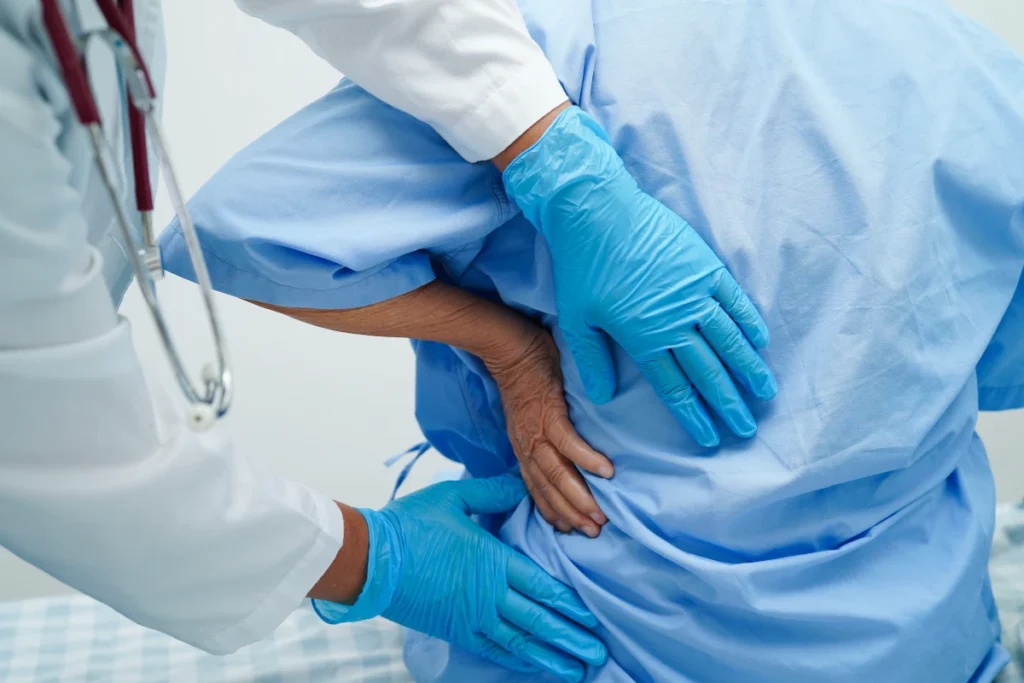
Hip and knee replacement in Medellín has become one of the most sought-after options for international patients who need orthopedic surgery with first-rate standards. Do the operating rooms have the same equipment as in your country? Do the surgeons have equivalent training? Are the implants the same? The answer to all three questions is yes, and this article explains why that answer is backed by independent international organizations — not just the clinics' own claims.
What Does a Hip or Knee Replacement Surgery Include?
Total hip or knee replacement — technically called arthroplasty — involves removing the damaged joint and replacing it with a prosthesis made of metal, ceramic, or high-density polyethylene. It is one of the most successful orthopedic procedures in the world: more than 90% of patients report significant pain reduction and sustained functional recovery over decades.
The process goes well beyond the day of surgery. It includes pre-surgical evaluations, laboratory tests, an anesthesiology consultation, two to four days of hospitalization, and an immediate rehabilitation phase that begins within the first 24 hours after the procedure. Getting up and taking the first steps with support is not optional — it is standard protocol at reference orthopedic centers in Medellín.
Hip and Knee Replacement in Medellín: The Backing of International Accreditation
The strongest argument in favor of Medellín as a destination for orthopedic surgery is not anecdotal and does not rely on testimonials: it is certified by the Joint Commission International, known as JCI. This U.S.-based organization is the same one that accredits the best hospitals in North America and Europe, and its evaluation process is one of the most rigorous in the world. You can verify the accreditation status of any hospital directly in the official Joint Commission International directory.
Obtaining JCI accreditation is not an administrative formality. It means passing audits across more than 1,000 measurable elements covering patient safety, medication protocols, infection control, clinical staff competencies, and infrastructure standards. Once accredited, a hospital must renew that certification periodically and maintain continuous compliance. Medellín has JCI-accredited hospitals, which means that a patient who chooses hip and knee replacement in Medellín is in an environment that has passed exactly the same filter as a reference hospital in Chicago or London.
This has concrete practical consequences. Operating rooms meet the same sterilization standards. Complication management protocols are defined and audited. Anesthesiology staff work under international guidelines. This is not a matter of faith — it is verifiable.
The Implants: Same Brands, Same Materials
One of the most common concerns among patients considering orthopedic surgery outside their home country is that the implants will be of lower quality. At Medellín's reference centers, that concern has no basis.
The city's leading orthopedic clinics work with the same implant brands used by top hospitals in the United States and Europe: Zimmer Biomet, Stryker, and DePuy Synthes, among others. These manufacturers have an active commercial presence in Colombia and supply the same products to both local and international markets. Before confirming any procedure, patients can — and should — explicitly ask which brand and implant reference will be used in their case. A serious surgeon answers that question without hesitation.
The Surgeons: International Training, High-Volume Local Practice
Institutional accreditation matters, but the surgeon who operates matters equally. In Medellín, leading orthopedic surgeons combine two characteristics that do not always go together: postgraduate training at internationally recognized centers and a very high volume of local practice.
Many of the orthopedic surgeons at Medellín's reference clinics completed fellowships or specializations in Spain, France, the United States, or Germany. Several publish in indexed medical journals and participate in international orthopedics conferences. That academic profile, combined with the high number of procedures they perform in Colombia — a market with sustained surgical demand — produces surgeons with a depth of experience that is difficult to replicate in healthcare systems where volume per specialist is lower.
In our section medical specialists section you can review the profiles we work with and request an initial evaluation of your case.
How Many Days Do You Need in Medellín for Initial Recovery?
Trip planning depends directly on understanding the real timelines of the process. For an uncomplicated hip or knee replacement, the typical schedule is as follows:
- Days 1–4: post-surgical hospitalization, start of physical therapy, and wound assessment
- Days 5–14: recovery at accommodation near the clinic, with daily or every-other-day rehabilitation sessions
- Day 14–21: clearance for air travel, based on the treating surgeon's assessment
Most orthopedic surgeons recommend not boarding a long-haul flight before 14 days due to the risk of deep vein thrombosis. Some cases — bilateral replacements or patients with pre-existing conditions — may require up to 21 or 28 days in the destination. Those weeks require comfortable accommodation that is accessible for reduced mobility and can accommodate a companion. The Salud sin Fronteras blog has a detailed guide on the best places to stay in Medellín after a medical procedure, with options that already have agreements with clinics in the city.
How to Coordinate Your Orthopedic Surgery from Abroad
The biggest obstacle for an international patient is rarely the procedure itself — it is the logistics surrounding it. Identifying the right surgeon for your specific type of arthroplasty, understanding which tests to bring from your home country, coordinating surgery dates with flights, arranging transport between the airport, clinic, and accommodation, and having someone available if a question comes up late at night — all of this requires local knowledge and established contacts.
That is exactly the role of medical coordination. It does not replace the doctor: it complements the clinical side by handling the logistical and administrative pieces so the patient can focus on recovering. You can review in detail all the coordination services we offer for international patients coming to Medellín for orthopedic procedures or other specialties.
Write to us from our contact page and we will respond within 24 hours — hip and knee replacement in Medellín can be more accessible than you think when you have the right support.