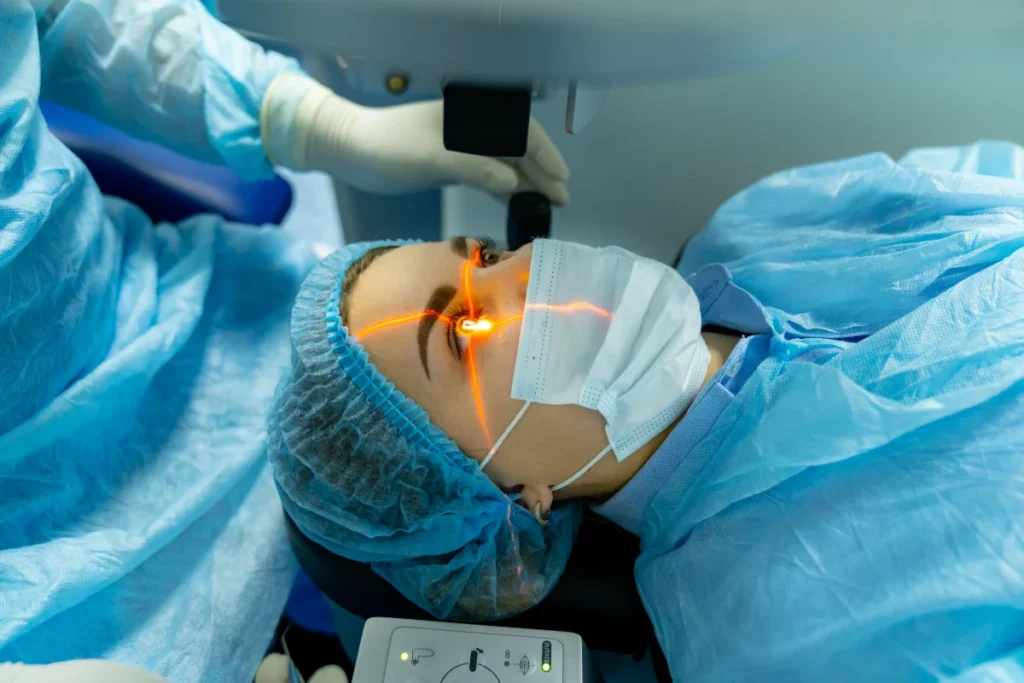
Ophthalmology in Colombia has reached a level of development that positions it as one of the most sought-after specialties among international patients who need LASIK surgery, cataract treatment, or correction of other visual defects. Reference ophthalmology centers in the country work with state-of-the-art technology, surgeons with international training, and clinical protocols equivalent to those of the best vision institutes in the United States and Europe. This article explains which procedures are performed, what standards guarantee quality, and how to coordinate the process from abroad.
What Procedures Does Ophthalmology in Colombia Cover
Reference ophthalmology centers in Colombia offer a broad spectrum of procedures ranging from refractive correction to the management of complex ocular pathologies. The most sought-after by international patients are the following:
LASIK Surgery and Refractive Correction
LASIK surgery uses an excimer laser to reshape the cornea and correct myopia, hyperopia, and astigmatism. The procedure is outpatient, performed under topical local anesthesia, and lasts between 10 and 15 minutes per eye. Visual improvement is practically immediate: most patients report clear vision from the following day. Reference centers in Colombia also work with the PRK technique, indicated for patients with thin corneas who are not candidates for standard LASIK, and with diagnostic platforms such as corneal topography, pachymetry, and optical coherence tomography that allow high-precision surgical planning.
Cataract Surgery with Intraocular Lens
Cataract surgery involves removing the opacified lens and replacing it with an artificial intraocular lens. At specialized centers in Colombia, it is performed using the phacoemulsification technique, which fragments the lens with ultrasound through a minimal incision, and in selected cases with femtosecond laser assistance, which increases procedural precision. The type of intraocular lens — monofocal, multifocal, or toric — is defined according to the patient's visual needs and lifestyle. The Colombian Society of Ophthalmology establishes clinical practice standards for these procedures, and you can consult their guidelines directly at the official Colombian Society of Ophthalmology portal.
Glaucoma Treatment and Retinal Pathologies
In addition to refractive procedures, ophthalmology centers in Colombia treat more complex pathologies such as glaucoma, retinal detachments, macular degeneration, and diabetic retinopathy. These conditions require specialized diagnostic equipment — angiography, retinal OCT, computerized visual fields — which is available at reference centers in Medellín, Bogotá, and other cities where Salud sin Fronteras operates.
Ophthalmology in Colombia: Technology and Clinical Standards
The strongest argument in favor of Colombia as a destination for ophthalmological procedures is not only the availability of treatments, but the technological level at which they are performed. Reference centers work with state-of-the-art laser platforms from manufacturers such as Alcon, Johnson & Johnson Vision, and Zeiss — the same brands that equip the best vision institutes in North America and Europe.
Candidate selection protocols are equally rigorous. Before any refractive surgery, the patient undergoes a complete pre-operative study that includes corneal topography, pachymetry, aberrometry, and a dilated pupil examination. That process identifies contraindications and allows the laser parameters to be individually customized for each eye. A patient who is not a candidate for LASIK knows before traveling, not on the day of surgery.
The most prominent ophthalmological centers in Colombia operate under accreditation from the Ministry of Health, and several also hold international certification. That accreditation ensures that operating rooms, anesthesia management, and post-operative follow-up protocols meet externally audited standards.
Candidacy and Pre-Trip Evaluation
The candidacy evaluation for LASIK or cataract surgery can begin remotely before traveling to Colombia. The patient shares their current refraction data — the result of their last optometric exam — and the medical team does a preliminary assessment to determine whether the case is viable. That virtual consultation does not replace the in-person pre-operative study, but allows an informed decision about the trip to be made before purchasing a ticket.
Basic candidacy criteria for LASIK include being at least 21 years old, having a stable prescription for the past 12 months, a cornea with sufficient thickness, and the absence of corneal pathologies. For cataracts, the process is different: the surgical indication is defined by the ophthalmologist based on the degree of opacity and its impact on the patient's visual quality, and in that case the in-person consultation is the real first step of the process.
In our section medical specialists section you can review the ophthalmologist profiles we work with and request an initial evaluation of your case.
How Many Days Do You Need in Colombia for an Ophthalmological Procedure
The recovery profile of ophthalmological surgery is one of the most favorable within medical tourism, because the required length of stay is short. For bilateral LASIK surgery without complications, the typical schedule is as follows:
- Day 1: complete pre-operative study and candidacy confirmation
- Day 2: outpatient surgical procedure, immediate post-operative checkup
- Days 3–5: follow-up checkups and verification of achieved visual acuity
- Day 6–7: clearance for air travel in most cases
For cataract surgery the schedule is similar, although some surgeons prefer to operate on one eye per session with an interval of one to two days between both procedures, which may extend the stay to 10 days. In our destinations section you can see the cities where we operate and the services available in each for patients in the recovery phase.
How to Coordinate Your Ophthalmological Procedure in Colombia from Abroad
The process for an international patient considering ophthalmology in Colombia begins with a virtual consultation in which the surgeon reviews the current prescription, the ocular clinical history, and determines whether the case requires additional studies before the trip. Once viability is confirmed, logistics are organized: dates, accommodation near the clinic, and transport during post-operative checkup days.
Ophthalmological procedures have the advantage of requiring short stays, which simplifies trip planning. You can see in detail all coordination services we offer for international patients, and if you want to start the process with a case evaluation, write to us from our contact page. contact page.